The essential customer research
How to find what your customer actually cares about using free signals: review mining, ad-library analysis, and your own Shopify data.
The essential customer research
How to find what your customer actually cares about using free signals: review mining, ad-library analysis, and your own Shopify data. The full research-to-strategy flow used by the best DR creative strategists, done with Claude and a CSV.
About 2,400 words. Prompts copy-pasteable. Works whether you have 50 reviews or 50,000.
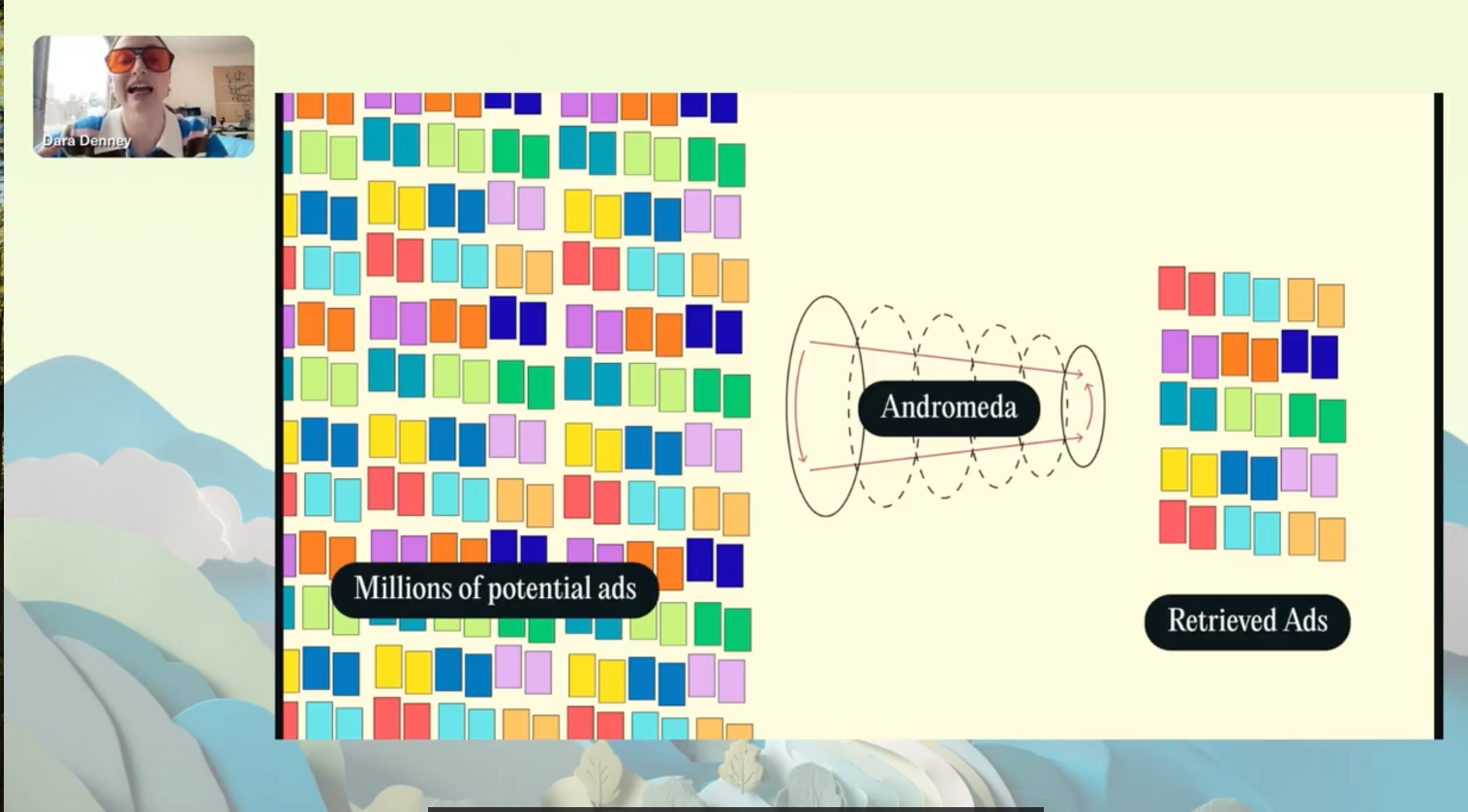
Dara Denney's point: the messy middle between "do research" and "make ads", turning research into a ranked list of bets with a written reason for each, is the part almost nobody teaches. Her three-part fix:
- Personas: compare who your ads target with who actually buys. The gap is your opportunity.
- Diagnosis: one or two sentences that explain why the next batch of ads should exist.
- Roadmap: rank ideas by evidence, not taste, and organize them so production can actually ship.
Step 1 - Pull The Persona Your Ads Are Currently Targeting
Before you look at customers, look at what your ads already say about who they're for. Andromeda routes them to whoever the creative implies, regardless of your audience targeting, so see that first.
Ask Claude to analyze the public Meta Ad Library for any brand you want. Yours, a competitor, anyone. It works for free, no special tooling required.
Analyze who the ads appear to target
Can you do an analysis on [BRAND]'s Ad Library?
[PASTE META AD LIBRARY LINK]

The things I am most interested in learning:

- Their format breakdown (video / static / carousel / partnership)
- The distribution between partnership ads and brand ads (partnership ads are the ones with "with"
  and a creator handle)
- Their core messaging strategies that they are repeating
- Who they seem to be targeting as personas, from the POV of their ads only
- A more in-depth analysis of the top 10 ads with the most impressions
What you're looking for in the output: a primary persona, a secondary persona, the format mix, and Dara's signature move, the partnership ad ranking. If their highest partnership ad is way down at impression rank #20+ and partnership is < 20% of total ads, that's almost always low-hanging fruit. (For her oats overnight teardown that one observation became an entire pillar of the roadmap.)
Step 2 - Pull The Persona Your Customers Actually Are
Now flip the camera. Export your reviews to a CSV (or scrape them if you don't have access, Claude with Chrome handles this fine). Drop them in and ask for the real personas.
Extract real buyer personas from reviews
From this CSV of reviews, do the following:

1. Extract 5+ core personas. Give each a name that fits their trigger or main problem, age range,
   and 1-line descriptor. For each, write a 2-3 sentence emotional narrative: what they feared, what
   they wanted, and what finally made them act.

2. Pull 2-3 verbatim quotes per persona that signal their core pain point or desire. These are
   potential ad hooks.

3. Rank the personas for the ones that show up the most. Make another ranking that shows the ones
   who use the most emotion in their reviews.

4. End with a demographic summary of 50-75 words identifying the dominant audience segment, shared
   emotional triggers, and the single biggest unmet desire across all responses. Write as if you're
   briefing a media buyer before a campaign launch.
Always ask the LLM for verbatim review quotes alongside each persona. Two reasons: it gives you ready-made hooks, and it lets you check the AI's work. If the quotes don't match the persona it built, the persona is hallucinated.
Step 3 - Diagnose Where Each Persona Is In The Awareness Journey
Once you have personas you trust, run them through Eugene Schwartz's market sophistication framework. This is what tells you whether to write "here's a new solution" copy or "prove it, I don't believe you" copy.
Sophistication + awareness diagnosis
Using Eugene Schwartz's Market Sophistication framework, what
can you tell me about the market sophistication of each persona?

Quick refresher on Market Sophistication:

1. Stage 1 - Unaware / First Solution: "Here's a new solution."
2. Stage 2 - Aware of Solutions: "Here's a better solution."
3. Stage 3 - Aware of Mechanisms: "Here's a new way it works."
4. Stage 4 - Saturated Claims: "All the big claims have been made."
5. Stage 5 - Highly Cynical / Jaded: "Prove it. I don't believe you."

For each persona, tell me which stage they appear to be in, what proof they need, what claim type is
most likely to work, and what creative angle should be avoided.
This is the step that earns the rest of the work. With personas and hooks in hand it's tempting to jump straight to making ads, but a Stage 5 jaded persona needs proof-first creative (testimonials, clinical, before/after with receipts), and a Stage 1 unaware persona needs mechanism-first creative (here's what this is). Same persona, wrong stage, wasted spend.
Step 4 - Write The Diagnosis
This is Dara's most underrated step. After all the research, you write one or two sentences that explain why the next batch of ads exists at all. Not the hooks. Not the creatives. The strategic why.
Some real examples she gave:
- Bed Threads: "All our current creative is solution-aware or below. We need top-of-funnel content that engages, educates, and refills the paid social funnel."
- Newer client (name redacted): "All top-performing content is for one persona. We need to open up a brand new audience before doubling down."
- Quarterly re-diagnosis client: "Persona testing showed the 40+ age segment has best retention. Q2 creative will focus exclusively on 40+ creators."
- Audit client: "They have winning angles they aren't doubling down on enough. The next 30 days is just more of what works, in more formats."
The diagnosis is also your shield. When the brand marketing team asks for the Mother's Day 25%-off static, the diagnosis is what lets you push back: that's not what this quarter is about. (Dara's hot take: your job isn't to make promo statics that get turned off in a week. Your job is to grow the business. Build an MVP process to clear those requests, then get back to the diagnosis.)
Step 5 - Build The Roadmap
Dara's roadmap template has four parts. The discipline of writing all of this down is the real payoff: at any scale, it keeps creative compounding instead of getting pulled week-to-week into whatever the calendar demands next.
| Section | What lives here | Cadence |
|---|---|---|
| Creators | The shortlist of creators you want to work with. Even in the AI era, partnership ads still drive serious volume. | Living doc, updated quarterly. |
| Icebox | Every idea, hook, persona angle, or insight you've ever had on this brand. No grading. Just write it down. | Add to it constantly. Never lose an idea. |
| Quarterly plan | Holidays, marketing-calendar events, product launches, which personas you'll test in which quarter, BAU iterations. | Plan one quarter ahead. |
| Monthly roadmap | The actual creative plan: persona -> 1-2 sentence idea -> 3 messaging/hook variations per concept. | One per month. Older months collapse but stay searchable. |
Filtering The Icebox Through Evidence
The icebox will balloon. To turn it into a roadmap, every idea gets filtered through evidence. Dara's confidence scale:
| Confidence | What earns it |
|---|---|
| High | Pressure-tested formats, messaging, or creators that have already won in your account. (Seed Health knows the "pooping every day" angle is a high-confidence pillar; 1 in 7 of their ads features it.) |
| Medium | Proven messaging in a new format, or a new persona pulled from validated review research. |
| Low | "A competitor has been running this for 100 days on Foreplay." Dara turns these down at stand-ups. The ad might be running because it's buried in a retargeting campaign, not because it's working. |
Iterations of winners (Tier 1 edits) get priority. Then proven-message / new-format tests (Tier 2). Then bigger swings (Tier 3 production). Always have a couple of quick-iteration wins shipping in week 1: they're cheap, they build trust with whoever's paying you, and they usually outperform the bigger swings anyway.
Step 6 - Bonus Prompts For Ongoing Research
Once the brand context is loaded into your Claude project, these are the natural-language shortcuts to keep using week after week:
Run inside Claude with brand context loaded
1. Who are the 5 personas this brand is targeting based on its ads?
2. Which persona should I focus on first, and why?
3. Based on this persona, which existing ad should I iterate on?
4. What are the strongest iteration opportunities for that ad?
5. I want to keep targeting [PERSONA]. What are 5 new ad ideas
   I can produce?
6. Of those 5 ideas, which should I prioritize my effort against,
   and why?
The Creative Brief Template That Ties It Together
Once research is done and the roadmap is built, every brief follows the same shape:
That's Dara's whole system. With personas, a diagnosis, and an evidence-ranked roadmap, you're ready to look at what good ads actually look like, then make them.
Sources And Credits
The research-to-strategy flow, persona-gap analysis, and the diagnosis concept in this guide are taught publicly by Dara Denney, Partner at Point Guard Media, most fully in her video How to Diagnose a Brand & Prioritize Your Ideas. We're crediting her for teaching and refining these frameworks, not necessarily for inventing every component. The Eugene Schwartz Market Sophistication framework long predates all of us. The sequencing into one operating system, the prompts you can copy-paste, and the starter-vs-scale guidance are ours. Andromeda details from Meta Engineering blog (Dec 2024) and subsequent rollout coverage. If the frameworks land, that's because of Dara. If anything is wrong, that's on us.